Loading…
A travel guide to
Berat.
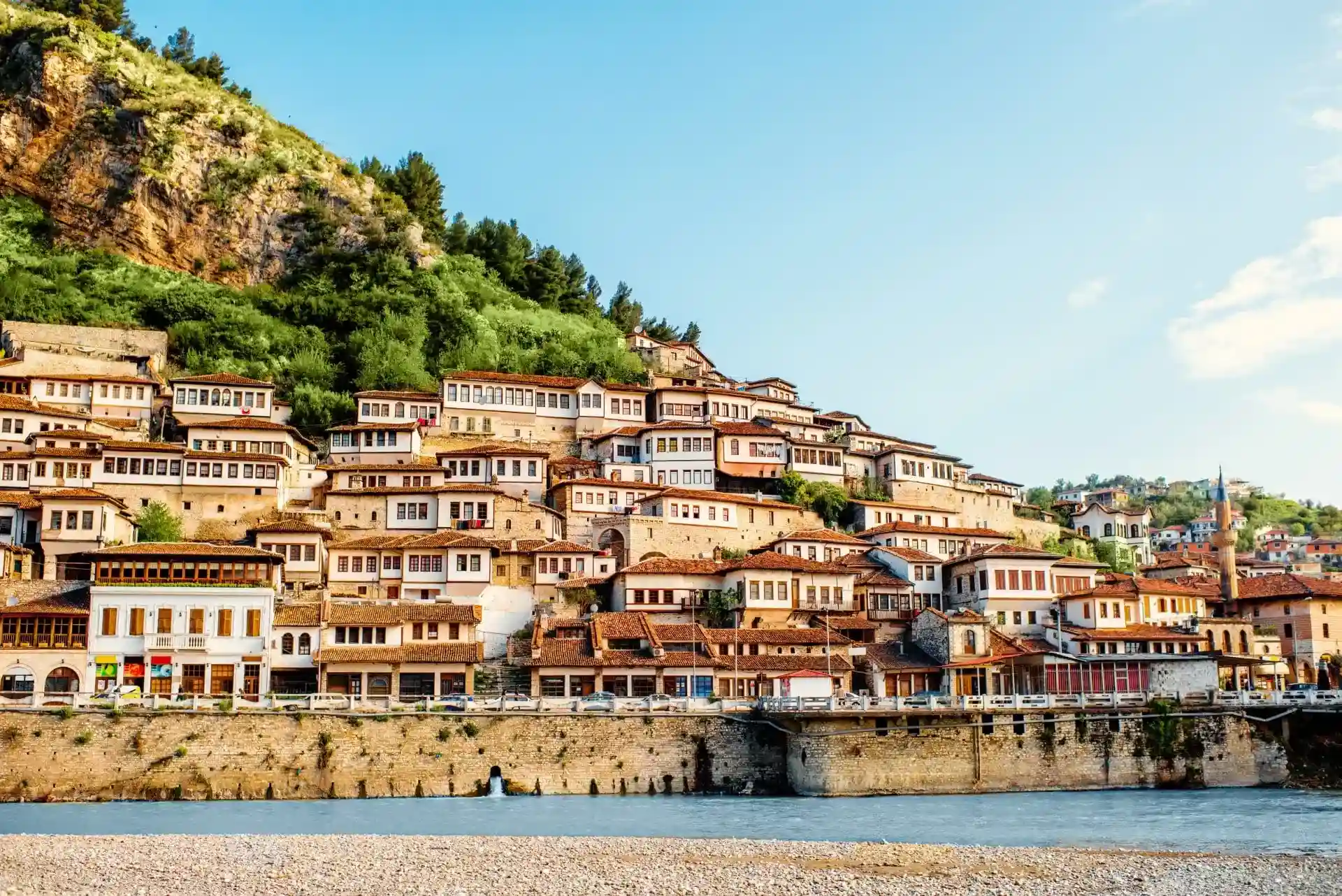
The City of a Thousand Windows. Stacked Ottoman houses climbing two hills above the Osum river, a UNESCO-listed castle quarter still inhabited after centuries, and some of the best raki in Albania.
What to find in Berat
Every category, curated and reviewed.
Restaurants in Berat
Where to eat — from family-run tavernas to the new wave of Tirana fine dining.
Browse allWhere to stay in Berat
Boutique, beachfront, budget, and luxury — every kind of stay across Albania.
Browse allThings to do in Berat
Attractions, museums, castles, markets, and the quiet corners most guidebooks miss.
Browse allBeaches near Berat
From Ksamil's turquoise coves to the Adriatic sand — every beach worth your towel.
Browse allTours from Berat
Day trips, private tours, hiking guides, and the food walks that turn a holiday into a story.
Browse allNightlife in Berat
Rooftop raki, live-music bars, and the Blloku clubs that run until dawn.
Browse allRent a car in Berat
Airport pickups, long-term rentals, and the only honest advice you'll read about driving in Albania.
Browse allCafés in Berat
The third-wave espresso bars and all-day coffee shops that power Albania's new creative class.
Browse allAbout Berat
Berat is a limestone hillside town where Ottoman-era houses stack so densely that the skyline looks almost like a single honeycomb of windows. The old quarters of Mangalem and Gorica sit on either side of the Osum river, connected by stone bridges and joined by a working castle that still has residents living inside it. UNESCO declared it a World Heritage site, and for good reason. The town feels like stepping into a living museum, but it's not a museum town in the sterile sense. People actually live here, eat here, argue here, hang laundry here. It's about two hours south of Tirana airport, inland enough to feel genuinely removed from the coast, and compact enough that you can explore the entire historic core on foot once you arrive.
Berat suits travelers who want to see how Albanians lived for centuries without the beach-resort energy. The food is straightforward and satisfying. lamb, byrek pastries, wine produced locally. English is spoken in hotels and the main restaurants, but venture into side streets and you'll need patience or a translation app. Summers get brutal. Temperatures regularly spike above 35°C, which turns climbing the stone alleys into a sweat test. Spring and autumn are ideal. The real draw is the walk itself. Wandering between the Mangalem quarter on one bank and Gorica on the other, ducking under arches, spotting the Onufri Iconographic Museum, and simply sitting in a small square watching the light move across those thousand windows. If you want to push beyond town, the Osum Canyon, Bogove waterfall, and Tomorr National Park all sit within day-trip distance.
- Best time to visit
- April, May, September, or October offer warm days without the punishing heat of summer. Winters are cool and quiet; summer can be brutally hot inland.
- How to get there
- From Tirana airport, it's roughly 120 kilometers south by car, a drive of about two hours. Once you arrive in town, everything is walkable. Buses and furgons connect Berat to Tirana in about 2.5 hours if you prefer not to rent a car.
Common questions
Berat travel FAQ
What is the Onufri Iconographic Museum?
It's a museum housed in a restored church in the old town that displays Byzantine and post-Byzantine icons and religious art. Entry is modest and it's one of the main cultural stops in Berat.
Can you walk up to Berat Castle?
Yes. The castle sits on the hill above the old quarters and is still partly inhabited by local residents. You can walk up through the neighborhoods to reach it and explore the grounds.
Is Berat good for a day trip or should I stay overnight?
Overnight is better. A full day lets you walk both Mangalem and Gorica quarters, visit the museum, and explore the castle without rushing. The town reveals itself slowly as you wander.
What's the food scene like in Berat?
It's traditional inland Albanian cuisine. lamb, byrek, and local wine are staples. Don't expect international variety, but the food is honest and good at small restaurants throughout the old town.
Is English widely spoken?
Yes in hotels and main tourist restaurants, but less so in shops and side-street establishments. Learn a few phrases or have a translation app handy.
Do I need a car in Berat?
A car helps if you want to explore the Osum Canyon, Bogove waterfall, or Tomorr National Park on day trips from Berat. Within the town itself, everything is walkable and steep enough that driving isn't useful. Most travelers rent one on arrival in Tirana if they plan to mix Berat with beach towns or other inland stops.
See car rentalsWhere should I stay in Berat?
Stay in the old town, either in Mangalem or Gorica. Both quarters have small hotels and guesthouses built into the historic houses, and that's really where the experience lives. Waking up in those narrow streets with the river and castle views nearby makes the visit memorable. Most book a place in the old quarters directly or search local listings for small family-run hotels.
Browse hotels
Last updated .