Loading…
A travel guide to
Tirana.
The capital, and still underrated next to other European ones. Blloku for cafés and design, Bunk'Art for Cold War history, the renovated Pyramid, and qofte with raki around the old bazaar.
What to find in Tirana
Every category, curated and reviewed.
Restaurants in Tirana
Where to eat — from family-run tavernas to the new wave of Tirana fine dining.
Browse allWhere to stay in Tirana
Boutique, beachfront, budget, and luxury — every kind of stay across Albania.
Browse allThings to do in Tirana
Attractions, museums, castles, markets, and the quiet corners most guidebooks miss.
Browse allBeaches near Tirana
From Ksamil's turquoise coves to the Adriatic sand — every beach worth your towel.
Browse allTours from Tirana
Day trips, private tours, hiking guides, and the food walks that turn a holiday into a story.
Browse allNightlife in Tirana
Rooftop raki, live-music bars, and the Blloku clubs that run until dawn.
Browse allRent a car in Tirana
Airport pickups, long-term rentals, and the only honest advice you'll read about driving in Albania.
Browse allCafés in Tirana
The third-wave espresso bars and all-day coffee shops that power Albania's new creative class.
Browse allAbout Tirana
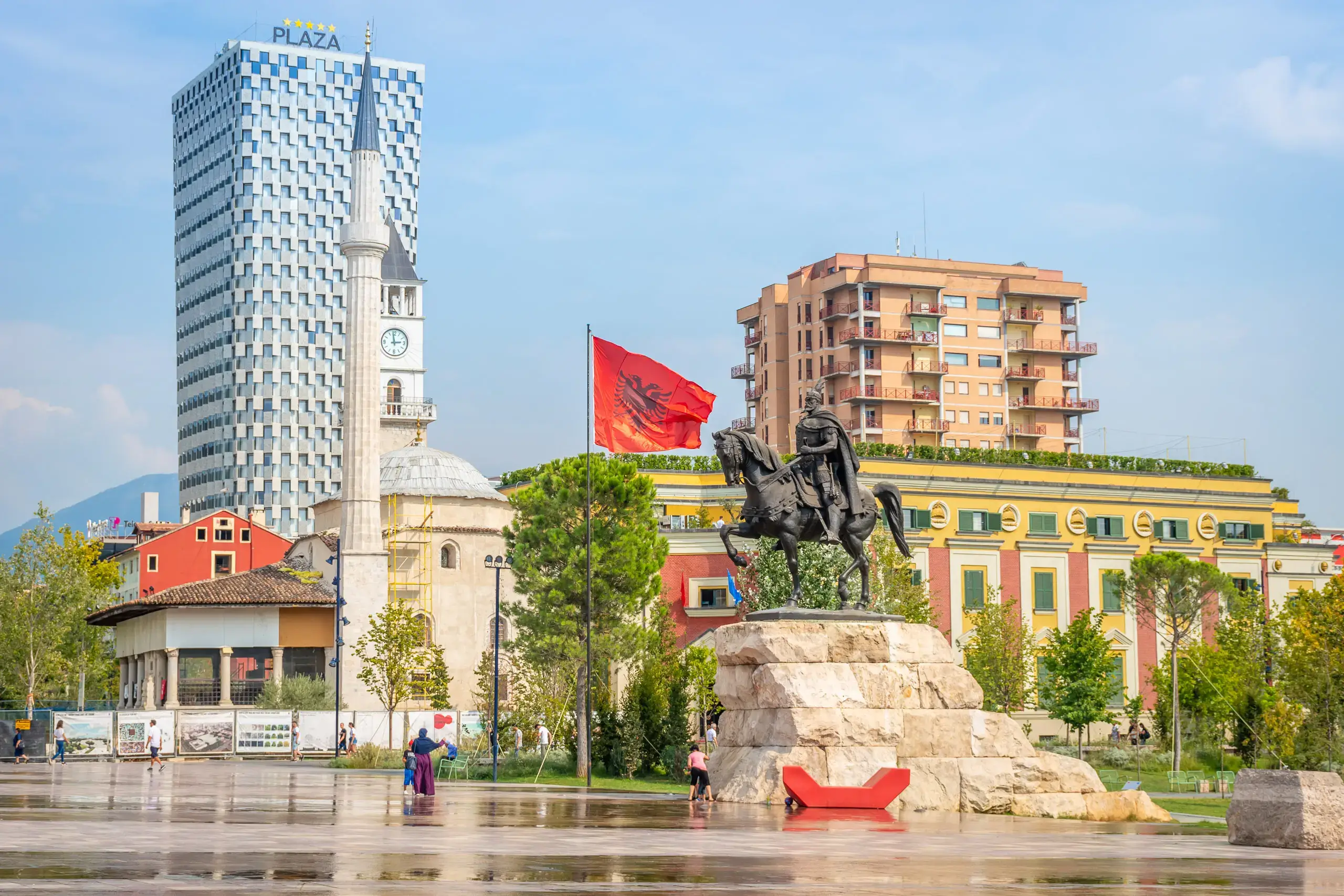
Tirana's energy comes from its reinvention. The capital sits in the foothills of Mount Dajti, ringed by mountains, and in the last couple of decades it's transformed itself from a gritty post-Cold War city into a place where locals actually want to spend time. Skanderbeg Square anchors the old core. The renovated Pyramid of Tirana sits nearby, a bold 1980s structure that's been repurposed as a cultural venue. Et'hem Bey Mosque stands as a reminder of centuries past. But the real buzz is in Blloku, the neighborhood that's become the city's design and nightlife hub. Cafes spill onto sidewalks, young Albanians mix with travelers, and the whole thing feels like a city that's finally at ease with itself. The city is walkable at its heart, and taxis are cheap via Bolt or local apps, so you don't need a car unless you're planning day trips.
Tirana works best for travelers who want energy, food, and a dose of recent history without the tourist fatigue of Western Europe. The city's museums—Bunk'Art 1 and Bunk'Art 2, housed in preserved Cold War bunkers—are genuinely engaging, and they don't require hours of queuing. Food is honest and filling: qofte (grilled meatballs), tave kosi (baked lamb with yogurt), byrek, and raki fuel long meals and café conversations. English is widely spoken in Blloku and tourist areas, and Italian too among older generations, so communication is straightforward. Mount Dajti's cable car is a quick escape if you want mountain air and views over the city, or you can push out to Lake Bovilla or the castle and bazaar of Krujë (45 minutes away) for a proper half-day adventure. Tirana doesn't pretend to be something it isn't, and that's exactly why it works.
- Best time to visit
- Visit in May, June, September, or early October. Summers (July and August) are scorching and dry, hitting 30°C or higher, while winters are mild and wet.
- How to get there
- From Tirana International "Mother Teresa" airport (TIA), it's 17 kilometers to the city center by taxi, roughly 30 minutes depending on traffic. Most travelers take a taxi or use Bolt (the local ride-hailing app) directly from arrivals.
Common questions
Tirana travel FAQ
What's the best way to get up Mount Dajti?
The cable car is the easiest option and takes you up quickly with views over the city. You can walk down if you want, or take the cable car both ways.
Is it easy to find good food in Tirana?
Yes. Look for grilled meatballs (qofte), tave kosi (baked lamb with yogurt), byrek, and raki. Restaurants and cafes are everywhere, especially in Blloku, and prices are low.
Do the Cold War bunker museums take a long time to visit?
No. Bunk'Art 1 and Bunk'Art 2 are compact, immersive, and can each be done in an hour or two without rushing.
Will I be able to get around without speaking Albanian?
Yes. English is widely spoken in Blloku and most tourist areas, and Italian is common with older locals. Communication is not a problem.
Do I need a car in Tirana?
You don't need a car to explore Tirana itself. The city center is walkable, and taxis are cheap via apps like Bolt. However, if you want to visit Lake Bovilla, Mount Dajti beyond the cable car, or take a day trip to Krujë (45 minutes away), renting a car makes sense and gives you more flexibility. Most travelers pick one up on arrival if they're planning countryside time.
See car rentalsWhere should I stay in Tirana?
Blloku is the neighborhood to stay in if you want to be in the thick of cafes, design, and nightlife. It's central, walkable, and buzzing without feeling touristy. If you prefer the historic core around Skanderbeg Square, that works too, though Blloku has more energy and better options for dining and evening life. Most visitors compare options in these two areas.
Browse hotels
Last updated .