Loading…
A travel guide to
Durrës.
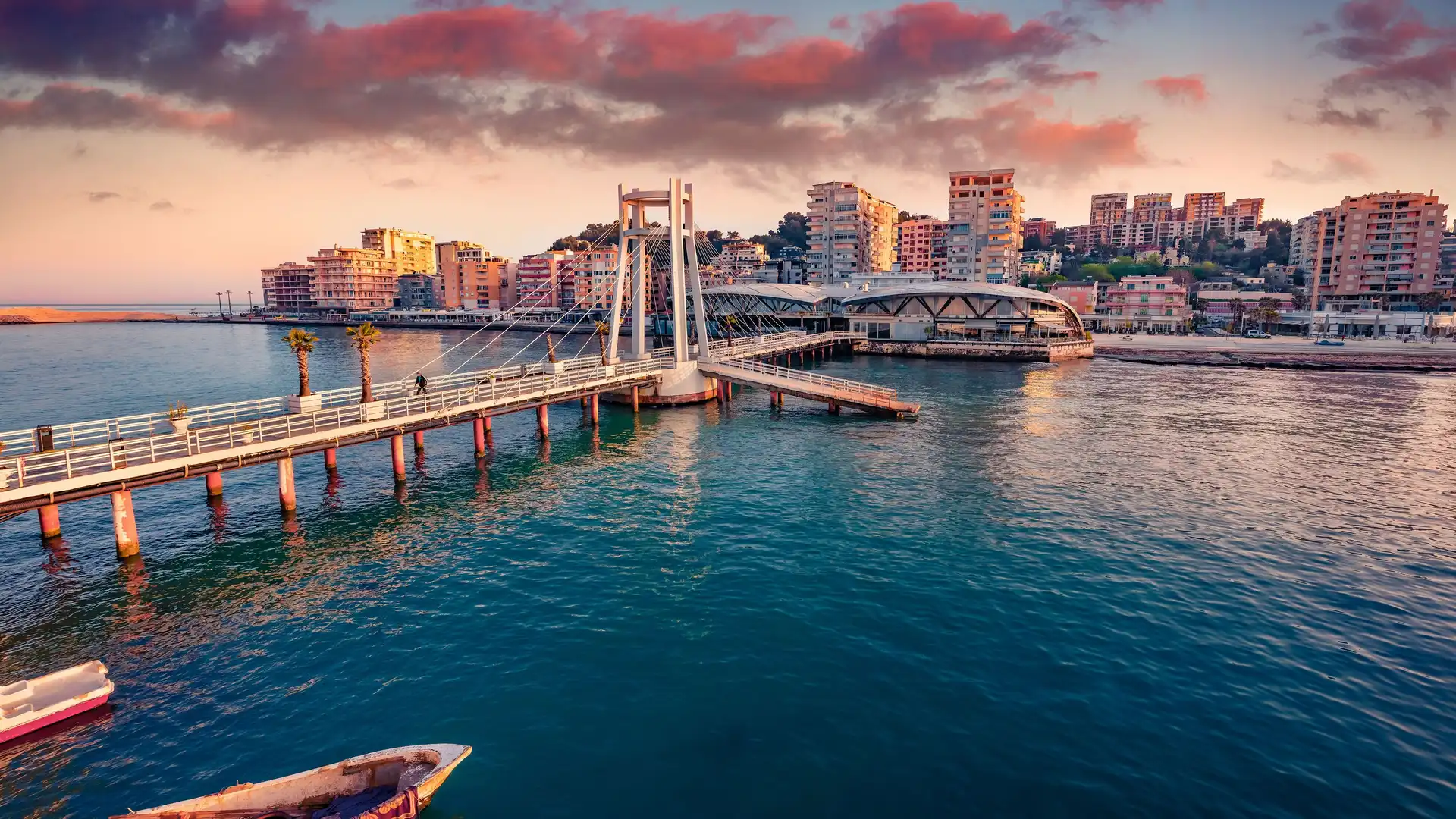
Albania's oldest port — over 2,600 years old, with a Roman amphitheatre in the city center that predates the Colosseum. A long Adriatic beach, warm-sea swimming, and 40 minutes from Tirana.
What to find in Durrës
Every category, curated and reviewed.
Restaurants in Durrës
Where to eat — from family-run tavernas to the new wave of Tirana fine dining.
Browse allWhere to stay in Durrës
Boutique, beachfront, budget, and luxury — every kind of stay across Albania.
Browse allThings to do in Durrës
Attractions, museums, castles, markets, and the quiet corners most guidebooks miss.
Browse allBeaches near Durrës
From Ksamil's turquoise coves to the Adriatic sand — every beach worth your towel.
Browse allTours from Durrës
Day trips, private tours, hiking guides, and the food walks that turn a holiday into a story.
Browse allNightlife in Durrës
Rooftop raki, live-music bars, and the Blloku clubs that run until dawn.
Browse allRent a car in Durrës
Airport pickups, long-term rentals, and the only honest advice you'll read about driving in Albania.
Browse allCafés in Durrës
The third-wave espresso bars and all-day coffee shops that power Albania's new creative class.
Browse allAbout Durrës
Durrës is Albania's main port and one of Europe's oldest continuously inhabited cities, with nearly 2,600 years of history packed into a working seaside town on the central Adriatic coast. What sets it apart isn't polished tourism infrastructure but the genuine layering of time: you can walk past a Roman amphitheatre in the city centre that predates the Colosseum, then spend the afternoon on a long sandy beach, then eat fresh seafood in a beachfront restaurant run by locals who've been there for decades. It's the kind of place where history feels lived-in rather than curated, and that's exactly why it works for travelers who want to see how Albanians actually live along the coast.
Durrës suits people who prefer getting under the skin of a place over ticking boxes. You get authentic Adriatic seafood, traditional Albanian dishes, the old Venetian tower, city walls, and an Archaeological Museum worth an hour of your time. The beach is genuinely good for swimming June through September, and the town has enough going on that you can easily spend a full day here without feeling bored. It's also perfectly positioned as a base or a stopover: Tirana is just 40 minutes away by bus or train, Krujë is an hour inland, and the ruins at Apollonia lie an hour south. The vibe is far more relaxed than the capital, which makes it a natural cooling-off point in an itinerary.
- Best time to visit
- June and September are ideal—warm enough for swimming but before the peak summer rush of domestic Albanian tourists. July and August are hot and crowded.
- How to get there
- From Tirana airport, it's 33 km and roughly 40 minutes by taxi to the city centre. Once you arrive, frequent buses and trains connect Durrës to Tirana and beyond, so you don't necessarily need a car if you're staying put.
Common questions
Durrës travel FAQ
Is it worth a day trip from Tirana?
Absolutely. Durrës is only 40 minutes from Tirana by bus or train, making it one of the easiest and most worthwhile half-day or full-day escapes. You get the beach, history, and fresh seafood without the capital's hustle.
Can you actually swim in the Adriatic here?
Yes, the water is warm enough for comfortable swimming from June through September. The beach at Plazhi i Durrësit is long and sandy, and there are sunbed rentals and beach bars along the shore.
What's the archaeological museum like?
It's a solid regional collection focused on the city's Roman and Byzantine periods, housed alongside the Roman amphitheatre in the city centre. You can see it in an hour or two without feeling rushed.
Is English widely spoken?
English is common enough in tourist zones, and Italian and German are also widely understood, which makes getting around straightforward for most travelers.
Do I need a car in Durrës?
A car isn't essential if you're staying in Durrës itself, since the beach and historical sites are walkable or a cheap taxi ride away. However, if you want to day-trip to Krujë, Apollonia, or explore beyond Tirana in one go, renting wheels gives you more flexibility. Most travelers compare options at the airport or pick one up on arrival.
See car rentalsWhere should I stay in Durrës?
Stay in the centre or along the beachfront if you want to be near the action, the amphitheatre, and the restaurants. The stretch around Plazhi i Durrësit is where you'll find the best seaside access and the most atmospheric dining, though it gets busier in summer. Most travelers browse available accommodation and find something that suits their budget and preferred vibe.
Browse hotels
Last updated .